Obviously wear sunscreen every day, why do you still get red spots and two degrees dark?
Some people complain that sunscreen is an IQ tax, but what doctors are more worried about is that you may use the wrong way of sunscreen.
The cruel truth about sunscreen in summer: apply it ≠ prevent it
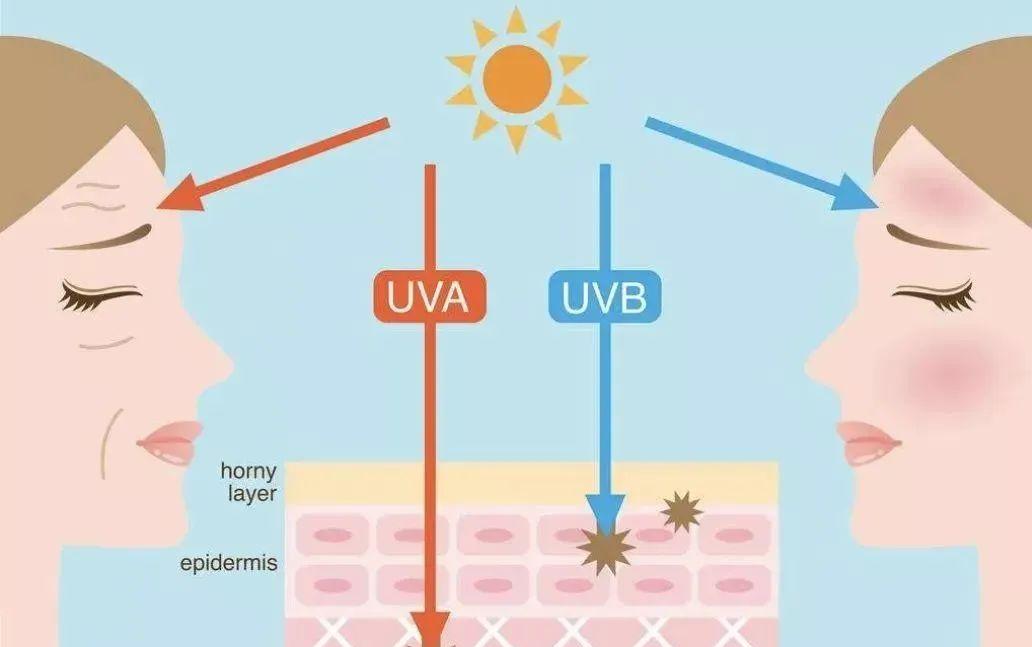
UV rays in the sun are skin killers: medium-wave UVB can directly burn the skin (redness, swelling, peeling, blistering) , long-wave UVA will penetrate the dermis, accelerate aging while tanning (wrinkles, stains, and even increased risk of skin cancer) 。 Especially in July, the intensity of ultraviolet rays is 30% higher than that of other seasons, so if you don't pay attention, you may be caught.
❌ Dosage discount
The international standard is 2 mg per square centimeter (The whole face is about the size of a 1 yuan coin) , but the survey shows that 70% of people use less than 1/4. In other words, the actual protective power of sunscreen with SPF 50 drops sharply to SPF 15 after the dosage is halved, which is equivalent to not applying it.
✅ Workaround: Use the fingertip unit method-the length of the first joint of the index finger, and apply evenly on the left cheek, right cheek, forehead, chin and other parts.
❌ Dead angle of missing coating
Hairline, behind ears, back of neck, back of hands and instep are high-frequency leakage areas. Common clinical V-shaped tanning: after unbuttoning the collar, the neck without sunscreen is two shades darker than the face.
✅ Workaround: Apply to the mirror, focusing on checking the joints of exposed parts (e.g. neck junction) 。
❌ Untimely repainting
Sweating, wiping (such as wiping your face with a paper towel) Swimming will damage the sunscreen film, 43% of people don't reapply it for more than 4 hours, and 25% never reapply it.
✅ Workaround: Reapply every 2 hours outdoors, and reapply immediately after swimming or sweating.
❌ Just look at SPF, ignore PA
SPF UVB resistant (sunburn) , PA UVA-proof (tanning and aging) 。 With products with SPF 50 but PA +, the UVA penetration rate reaches 50%, so tanning is inevitable.
✅ Workaround: Select products with broad spectrum label and PA + + + + or above (e.g. SPF 30 + PA + + +) 。
❌ Credulous low-priced niche models
Sampling inspections in 2024 showed that 22% of sunscreens had false labels or undetected sunscreen agents. Low-priced products may have insufficient sunscreen addition due to cost constraints.
✅ Workaround: Give priority to major manufacturer brands and check the ingredient list (Physical sunscreens such as zinc oxide and titanium dioxide, or chemical sunscreens such as octocrylene are more reliable) 。
❌ The scene does not match the sun protection
Commuting to the seaside with SPF 15 is equal to streaking; It is also ineffective to use SPF 30 outdoors without reapplying it.
✅ Workaround: SPF 30 + PA + + + for daily commuting; SPF 50 + PA + + + + for outdoor sports/seaside.
❌ High Temperature + Reflection, UV Double Attack
High temperature above 35 ℃ will make skin blood vessels dilate, and melanin will be more obvious; The ultraviolet reflectivity of beaches and water surfaces reaches 15%-25%, and even 80% in snow, which is equivalent to attacking from top to bottom.
✅ Workaround: Wear face mask + goggles at the seaside/snow, during high temperature periods (11:00-15:00) Try to stay indoors.
❌ Photosensitivity reaction is hard to prevent
Eating mango, celery, or exposure to the sun after taking sulfa drugs may cause erythema and blisters, and go beyond the sun protection area.
✅ Workaround: Avoid sun exposure during medication, and give priority to physical sun protection for sensitive skin (with zinc oxide/titanium dioxide) 。
Hard sunscreen (Physical occlusion) The efficiency of reducing UV damage is three times that of sunscreen, and the exposure season in July requires a two-pronged approach.
1 ️ ⃣ A (Avoid) : avoiding bright light
-
10:00-16:00 The ultraviolet rays are the strongest, so minimize outdoor stay; Don't relax on cloudy days (UV intensity reaches 80% in sunny days) 。
2 ️ ⃣ B (Block) : hardcore occlusion
-
Sunscreen clothing: Choose UPF 50 +, dark dense woven fabric (Red/navy UPF is 5 times that of light yellow) , to avoid cheap Internet celebrity models (25% failed) ;
-
Accessories: Wide-brimmed hat (brim ≥ 7.5 cm) UV 400 sunglasses, (Cover eyebrows and cheekbones) Parasol, (The black glue coating on the inner side is more sunscreen) 。
3 ️ ⃣ C (Cream) : Apply sunscreen scientifically
-
Chemical sunscreen: Apply 20 minutes in advance (Requires skin reaction) , suitable for oily muscle;
-
Physical sun protection: Immediate onset of action, suitable for sensitive skin and children (Hard sun protection is preferred for babies under 6 months) ;
-
Take-up: Outdoors every 2 hours, replenish immediately after sweating/swimming.
1 ️ ⃣ Cooling and calming down: Wrap an ice pack in a cold towel and apply it for 10 minutes (Avoid direct ice application) , relieve burning sensation;
2 ️ ⃣ Repair the barrier: Thick-coated gel containing ceramide and panthenol (e.g. aloe vera gel with 0.2% ceramide) ;
3 ️ ⃣ Seek medical attention promptly: If the blister area exceeds the size of the palm of the hand, or the severe pain is unbearable, weak hormone ointment should be used (e.g. 0.05% desonide) , use as directed by your doctor.

❌ The higher the index, the better: Daily SPF 30 + is enough, and high index can easily cause irritation;
❌ Rub, massage and apply: It will rub mud and block pores, just pat and push it away;
❌ Eyes and lips are also sunscreen: Switch to eye cream and lipstick with sunscreen value;
❌ The thinner the sun protection clothing, the more fashionable it is: Inferior thin models are not as good as ordinary coats for sunscreen, so look for UPF logo;
❌ No sun protection indoors: The UVA penetration rate by the window exceeds 60%, and it needs to be applied even if you sit by the window for a long time;
❌ Physical sunscreen must remove makeup: It can be cleaned with ordinary facial cleanser without cleansing oil.
The essence of sunscreen is to reduce the total exposure to UV rays, and sunscreen alone blocks up to 95% of UV rays.
This summer, remember If you can't avoid it, block it, and apply it again when you apply enough To really say goodbye to tanning and sunburn!

Disclaimer
- 1. This website aims to popularize skincare knowledge for readers;
- 2. The popular science content cannot replace doctors' diagnosis opinions, and is for reference only; If you have skin problems, please consult a professional doctor in time;